
You’ve been following the SEO playbook. Keyword research and creating relevant, helpful content that answers what people are searching for.
The traffic shows up (sometimes). But the sales? The leads? The bookings?
They don’t follow.
That’s because SEO teaches you to satisfy searchers, not move buyers. It optimizes for clicks and scroll depth, not for the mental shift someone needs to make before they’re ready to invest.
If helpful information were enough to make people buy, your SEO traffic would already be converting.
What Actually Moves Someone From “Just Looking” to “I’m Ready”
People don’t buy because they found an answer to a question, they buy because they changed their mind about something.
They stopped believing that they could figure it out alone.
They stopped trusting the approach they’ve been using.
They started seeing a better path forward and believing they could walk it.
That psychological shift isn’t something SEO optimizes for. And it’s not something that happens automatically just because your content ranks.
People move into ‘buy mode’ when their beliefs change, not when they get more tips.
Most SEO content helps you do more of what you already believe will work. Better tips, cleaner tactics, clearer how-tos — all for the same approach you’ve been using.
The problem is, that never changes the belief that leads to a buying decision.
When that belief is challenged — when you finally understand why what you’ve been doing isn’t working — you become open to a different approach.
That’s the gap belief-shifting content closes. And it’s the mechanism that turns traffic into revenue.
Belief-shifting content bridges the gap between knowing something and being ready to act on that knowledge
Instead of just giving someone an answer, it helps them see:
- Why what they’ve been doing hasn’t worked (without shame—with clarity)
- What they’ve been missing or misunderstanding (the real problem)
- Why a different approach makes more sense (the better way)
- What becomes possible when they shift their thinking (the next steps)
You’re not just teaching. You’re reorienting how they see the problem and the solution.
And when someone’s perspective shifts, their behavior follows.
Content Isn’t Just a Library, It’s a Path
Most business blogs are built like reference libraries. Each post exists on its own. You write about Topic A, then Topic B, then something trending, then something your audience asked about.
It’s helpful. It’s thorough. But it doesn’t lead anywhere.
Belief-shifting content doesn’t just sit there waiting to be discovered. It guides.
Every post is part of a journey. It meets someone where they are, shifts one belief, and points them toward the next step in their thinking.
You’re not waiting for the reader to connect the dots on their own. You’re drawing the line from “I have a problem” to “Here’s what I need to understand” to “Here’s what I’m ready to do.”
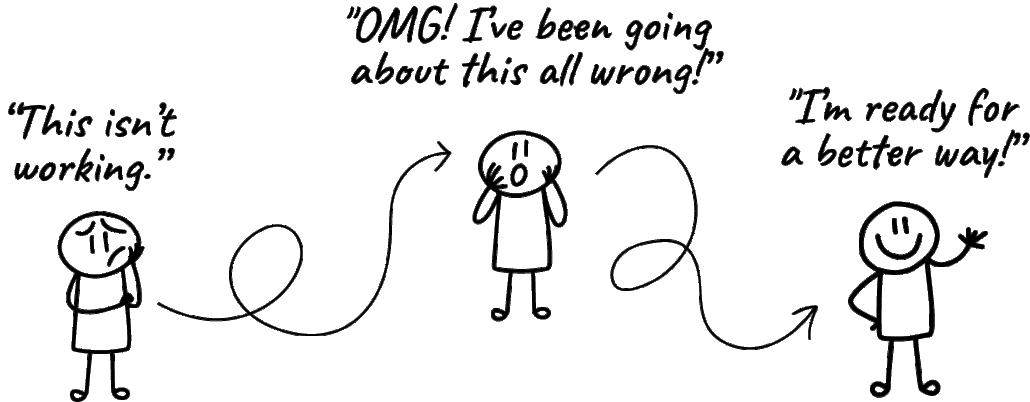
That’s how people actually move toward buying. Not all at once. Not after reading one perfect post. But through a series of small perspective shifts that build momentum.
Once you understand that beliefs (not tips) drive buying decisions, the question becomes:
How do you design content that shifts those beliefs on purpose?
That’s where structure comes in.
📌 Read next: How Conversion Clusters Build Authority for Humans, Search Engines, and AI

