
The deal used to be simple:
Write epic blog posts → Google rewards you with traffic → everybody wins.
Then, AI came along and disrupted the way the internet works.
In this post, I’m going to share a smarter, simpler approach to your 2026 blogging strategy. One that gives you permission to stop writing for Google, avoid the dreaded “zero-click search,” and turn your blog into a high-converting sales system.
Key Takeaways
- Getting cited by AI tools is our biggest opportunity right now. ChatGPT and Gemini are having conversations with our customers and our content needs to be the trusted source
- Start with your offers, not keywords. Every post should exist on a path to a sale
- Optimization > publishing consistency. You can’t compete with robots and that doesn’t work anyway. Add to the conversation and make sure your human fingerprint is all over your content
I used to spend weeks carefully crafting the most competitive, badass blog post on the internet whenever I’d find a keyword I knew I could rank for. Now, those posts are getting gobbled up by AI summaries so the traffic payoff just isn’t worth it anymore.
According to research by Ahrefs, Google’s Ai Overviews now keep 58% of clicks. Bit rude, if I do say so.
But AI’s devastating impact on organic traffic is only half the story…
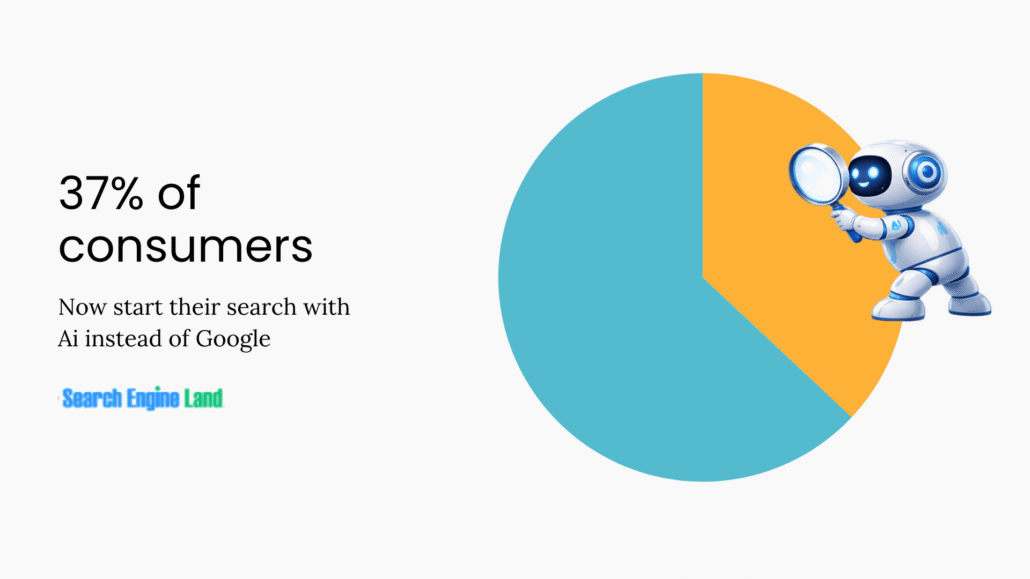
Search Engine Land found that 37% of all search queries now begin in an AI chat session, which means the way your customers find answers online and make purchasing decisions has been completely transformed too.
It’s no longer just about Google search.
Why the Old Blogging Playbook Stopped Working
It used to be that your potential customers would bop around reading multiple blog posts to do research until they finally decided what to buy or who to hire. Now, AI tools like ChatGPT are helping them make purchasing decisions in a single chat session.
If your blogging strategy still centers targeting keywords and maximum pageviews, you’re not targeting customers in those decision-making moments — because most traffic is “I’m just browsing” traffic, not buying traffic.
Ai didn’t kill blogging. It became a filter.
It’s answering the beginner questions when people are in learning mode but it’s still sending through the people who are ready for deeper research and more nuanced, specific answers from a human expert.
The goal isn’t to stop writing helpful educational content, it’s to stop writing content that doesn’t lead people closer to your offer. It’s not a total overhaul in your blogging strategy, it’s a shift.
Here are the steps:
Step 1: Start With Your Offers, Not Keywords
Stop letting search volume dictate your editorial calendar. With Google and AI hoarding most traffic now, we need to plan our content like a funnel and that starts with your offers, not keywords.
Start with your specific offers and then think about “What do people need to know or believe right before they buy?” and create content for that segment of your audience first.
- What are you selling?
- What are the false beliefs blocking people from buying it?
- What information do they need to see to feel confident choosing your solution?
That’s the foundation, not just what Google might reward you for. If you can’t logically connect the dots between a piece of content and what you sell, it’s not worth writing anymore. There, I said it.
Honestly? This is the game business bloggers should have been playing all along.
Step 2: Target the “Messy Middle” of the Funnel
In the AI era, the goal is no longer the most traffic, it’s qualified traffic — targeting readers who are actively researching a solution or considering a purchase, not just looking for tips or information that an AI chatbot is answering for them anyway.
This means a shift away from writing mostly for the top of the funnel (when people are furthest away from a purchase) to writing topics designed for active shoppers.
These people are in the hardcore research phase and actively looking for comparisons, reviews, and “who to hire” content to help them decide.
There are two ways to help people at this stage:
- Write topics that shift false beliefs that will block them from buying
- Answer “shopping mode” questions (also known as commercial intent queries)
Belief-shifting content is powerful because every purchasing decision is a belief decision. People don’t buy because you gave them the best tips, they buy because they changed their mind about a problem.
“Money Topics” target people in the messy middle of the customer journey; they’re in shopping mode. These topics are the difference between:
- “How to Set Up A Bird Feeder” and
- “The Best Bird Feeders under $50 for Complete Beginners”
If you’re selling a $49 bird feeder, one topic will have the most potential search volume and the other will attract customers.
We want to make writing money topics a priority and then find related topics that link to them to expand reach, not the other way around (which has been the blogging status quo until now).
In other words, you can still write the “How to Set up a Bird Feeder” post but it needs to link to your “Best Bird Feeders under $50 for Beginners” post.
This is the shift…
🔗 To learn more about what makes belief-shifting content different, I go deeper here: Belief-Shifting Content: The Missing Link Between Traffic and Sales.
🔗 A Conversion Cluster is a six-post series that starts with a false belief and shifts it until your offer is the obvious solution.
🔗 Planning money topics and conversion clusters are foundational skills my students learn inside Smart Business Blogging.
Step 3: Create Connecting Content to Expand Reach
This is Conversion-First content planning: rather than targeting the biggest audience segment at the top of funnel and praying some of those people eventually become customers, we target customers first and then use top of funnel content to expand reach and visibility.
Once you have belief-shifting content and/or “money topics” in place, you expand your content ecosystem with supporting content.
Think of them as “on ramps” that point traffic in the right direction.
Informational Intent Posts (“Browsing Mode”)
Most keywords target informational intent queries, so the old blogging playbook mostly focused on them. Now, this is where 99% of zero-click searches happen so we need to be cautious. Does this topic lead to a next step? Does it naturally exist on a path to what you sell?
If not, you’re just providing a free service for Google and AI to scrape the information and keep the traffic to themselves.
My rule is: every piece of content must invite readers to subscribe to your email list, link to at least one relevant piece of content, and where appropriate and helpful, link to a relevant offer.
Examples of informational intent topics include:
- Beginner guides
- “What is” definitional posts (be careful with these, they almost always result in a zero-click search unless you’re defining your unique method/framework)
- How to tutorials
- Lists of tips
You can also expand your reach by creating more “money topics” and link them together:
Commercial Intent Posts (Shopping Mode)
These posts help people who are actively considering and researching solutions to a problem. This is where your biggest opportunity is.
Examples include:
- Is It Worth It? (e.g., Is [Service/Program] Worth It? An Honest Look at What You Actually Get)
- Comparison posts (e.g., [Option A] vs [Option B]: Which Is Right for [Specific Audience]?)
- Alternatives (e.g., # Alternatives to [Solution] That Work for [Audience])
Transactional Intent Posts (Buying Mode)
These topics will make up the smallest % of your content mix but they target people who have their wallets out and are ready to buy. Examples include:
- How to Find / Hire / Choose (e.g, How to Choose the Right [Service/Tool] for Your [Goal])
- Titles that have any of these modifiers: Buy, Purchase, Order, Hire, Book, Sign up, Download, Price, Pricing, Cost, Coupon, Deal, Sale, Near me
The key is linking your content together and create pathways to a sale. When you write an informational intent post? It should link to a commercial intent post. A commercial intent post should link to a transactional intent post.
This internal linking forms what’s called a topic cluster, and planning your topics in clusters not only makes it easier for you plan content, it forms a map of your expertise for Google and AI tools too and builds topical authority.
Three birds with one stone: a better user experience, higher authority signals for the bots, and everything connects to your offers.
You’re not creating random content, you’re building pathways that all lead to your offers and turning your blog into a sales system.
That’s the big picture, but now we need to consider what you need to do on the per-post level to rank and get cited by Ai:
Step 4: Optimize Every Post for AI and Traditional Search
In the AI era of blogging, we’re trading in “just be consistent” for “making every post count.” That means structuring your posts in a way that makes it easy for AI to cite you, and creating comprehensive, authoritative content assets that Google wants to rank, too.
To do this, you also want to make sure that you’re adding to the conversation (this is what’s known as “information gain” in AI Search Optimization), not just regurgitating information people can get from ChatGPT or from AI-generated blog posts.
Ai cites content that:
- Makes it easy to understand, using proper document outlines and direct answers
- Demonstrates unique human authority, expertise, and experience
- Provides specific recommendations for specific audiences and situations
- Requires judgment, not just information
What they skip:
- Generic information they already have in their “brain”
The good news? You don’t need more content. Google is penalizing AI-generated content and doesn’t even consider ranking content that adds nothing to the conversation, and AI tools are actively hunting for unique human insights and data. Two well-optimized posts will outperform dozens of generic content all day every day.
Business Blogging is Back in A Big Way, But Every Single Post Needs to Count
AI didn’t make blogging harder, it exposed the flaws in how we were approaching it. The old playbook was built around getting as much traffic as possible and hoping some of it converted, but the new playbook is built around clarity:
- What do you sell and how does your content relate to it?
- How is your content helping your readers move closer to becoming a customer?
- How are you demonstrating to the bots and to humans that you’re a trustworthy human?
Our job now is to create the kind of content that serves our customers in a way the bots can’t replicate.
I packaged up the tips you learned in this post in a handy AI Traffic Cheat Sheet. Be sure to grab it before you go.

And when you’re ready to go even deeper, consider joining me in Smart Business Blogging.


This perfectly captures how dramatically AI is reshaping the world of search and content marketing. The old formula of creating long-form content purely for Google rankings is no longer enough as AI summaries and chat-based search experiences continue to change user behavior. Jin Grey is one of the best SEO Experts in the Philippines, she mentored many SEO wanna be Filipinos.